Is Fragrance Safe During Pregnancy? What "Parfum" Can Hide
Fragrance is awkward to evaluate because it is usually a black box. On an ingredient list, "fragrance" or "parfum" can stand in for dozens of compounds. Some are benign. Some are allergens. A few are the phthalates people worry about while trying to conceive or during pregnancy.
What the label is not telling you
Companies are often not required to disclose every component inside a fragrance blend. That means two products can both say "parfum" and contain totally different mixtures. It is why blanket internet lists that say "avoid all fragrance" feel satisfying and still leave you stuck in the shampoo aisle.
Faster than reading every label
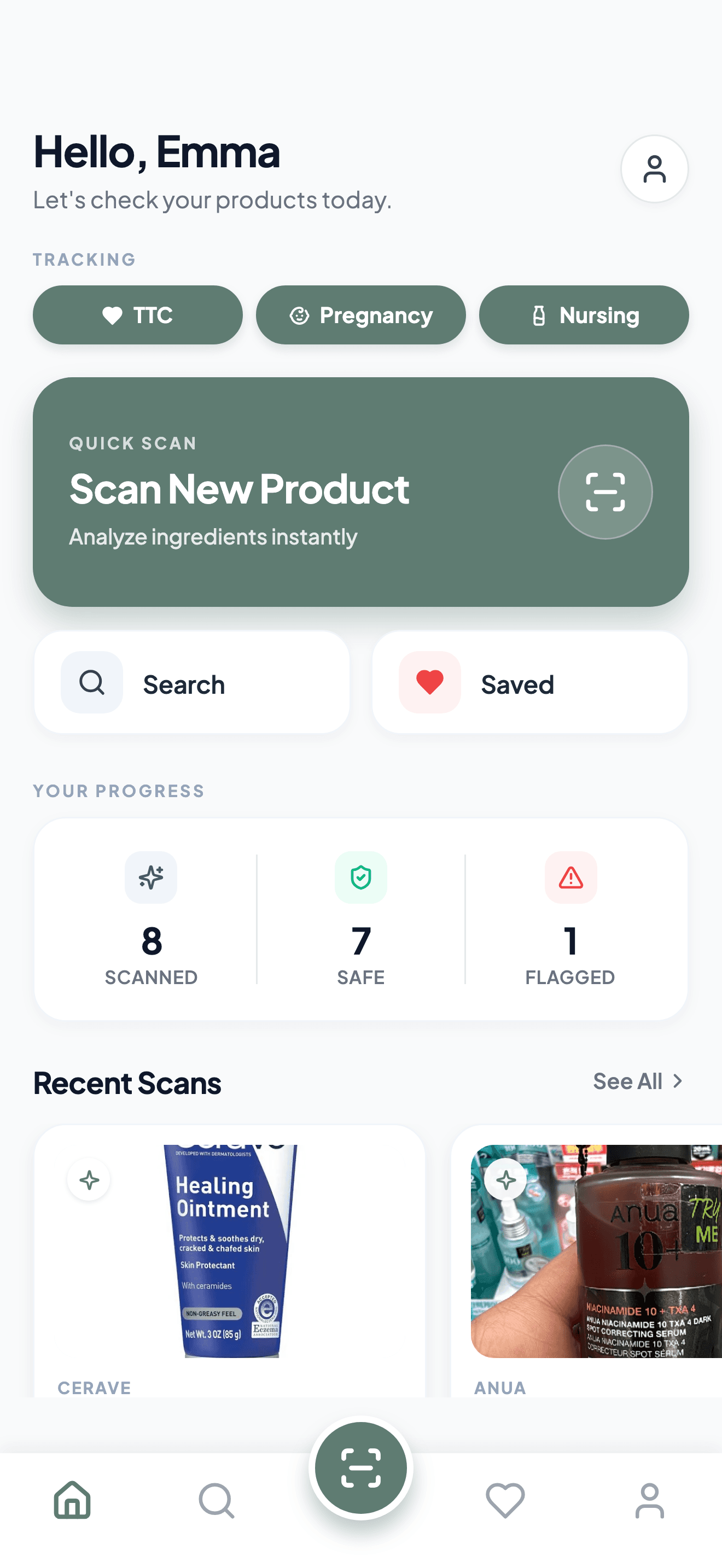
Scan the product in BloomSafe and get a stage-specific score in seconds.
Built for TTC, pregnancy, and breastfeeding — beauty and food in one place.

The evidence-based concerns
The strongest practical reasons people reduce fragrance in pregnancy are nausea and contact irritation — smell sensitivity is real, and inflamed skin is miserable. The more specific chemical conversation is about certain phthalates historically used in fragrance, and about endocrine-disruption research that is stronger for some compounds than others.
This is not the same as saying every scented lotion is dangerous. It means fragrance is a place where "optional exposure" is worth minimizing if you have easy unscented swaps.
Where fragrance hides
It is not just perfume:
- Hair products, especially leave-ins and dry shampoo
- Laundry detergent and fabric softener
- "Relaxing" body oils and belly balms
- Cleaning sprays used in small bathrooms
- Candles and diffuser oils that make a whole room scented
A sane approach
Keep the products you love if they do not bother you and are otherwise clean on actives. Switch the ones you use daily over large areas — lotion, wash, detergent — to fragrance-free when you can. Skip heavy perfume on days when smell alone turns your stomach.
BloomSafe will not magically invent the hidden fragrance formula. What it can do is flag products where fragrance sits next to other stage-relevant ingredients, and help you compare an unscented alternative without guessing from marketing copy.
Frequently asked questions
Do I need to go fully fragrance-free while pregnant?
Not always. Many people reduce daily leave-on fragrance and keep occasional scented products. If smells trigger nausea, fragrance-free is simply more comfortable.
Are essential oils safer than synthetic fragrance?
Not automatically. "Natural" is not a safety category. Some essential oils are discouraged in pregnancy, especially in high doses or when ingested. Treat them like active ingredients, not harmless vibes.
Keep reading
Related guides
Hair Dye During Pregnancy: What Stylists and Doctors Usually Say
How to think about permanent color, highlights, and root touch-ups in pregnancy — including timing, ventilation, and when to wait.
Read guideSelf-Tanner During Pregnancy: DHA, Spray Tans, and Safer Color
Whether self-tanner and spray tans are considered okay in pregnancy, what DHA does, and how to get color without UV beds or mystery bronzing cocktails.
Read guideTrying to Conceive: Ingredients That May Affect Fertility
Endocrine disruptors, retinoids and other ingredients worth phasing out while trying to conceive — what the evidence says, and what's just noise.
Read guide