Pregnancy-Safe Skincare: Ingredients to Avoid and Safe Swaps
Pregnancy changes what's safe to put on your skin. Some everyday actives can cross the placenta or be absorbed at levels that matter, while plenty of others are perfectly fine. This guide covers the ingredients most health authorities recommend avoiding, the ones that are debated, and the swaps that keep your routine working.
Ingredients to avoid during pregnancy
These ingredients have documented risk or strong precautionary guidance from bodies like the American College of Obstetricians and Gynecologists (ACOG), the FDA, and the NHS:
- Retinoids (retinol, retinyl palmitate, tretinoin, adapalene, tazarotene) — vitamin A derivatives linked to birth defects. Both ACOG and the NHS advise avoiding them in pregnancy, including topical forms.
- Hydroquinone — a skin-lightening agent with unusually high systemic absorption (around 35–45%). Most clinicians recommend avoiding it for the duration of pregnancy.
- High-dose salicylic acid (peels, oral) — low-concentration rinse-off or spot products are generally considered acceptable, but professional-strength peels and oral salicylates should be avoided.
- Arbutin and alpha-arbutin — skin brighteners that can release hydroquinone in the body, so they're generally avoided around conception and pregnancy.
- Certain chemical sunscreen filters (notably oxybenzone) — debated rather than proven harmful, but many clinicians suggest mineral filters as the cautious default.
- Formaldehyde and formaldehyde releasers (DMDM hydantoin, quaternium-15) — found in some nail and hair products; classified carcinogens with no safe reason to keep using.
Faster than reading every label
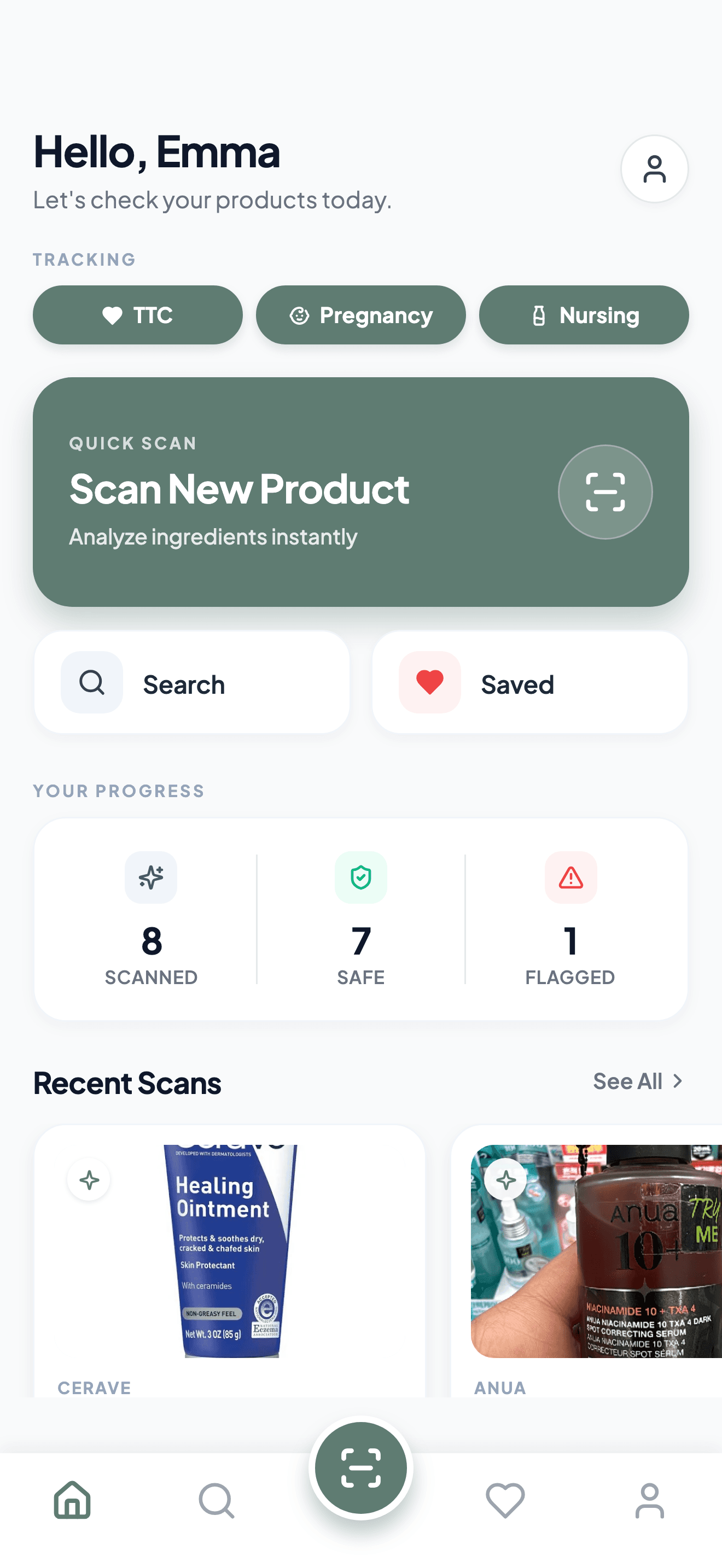
Scan the product in BloomSafe and get a stage-specific score in seconds.
Built for TTC, pregnancy, and breastfeeding — beauty and food in one place.

Safe swaps that actually work
You don't have to shelve your skincare goals for nine months. These actives are widely considered safe in pregnancy and cover most of the same ground:
- Instead of retinol → azelaic acid (acne, texture, tone) or bakuchiol (fine lines).
- Instead of hydroquinone → vitamin C, niacinamide, or azelaic acid for dark spots.
- Instead of strong salicylic acid → glycolic or lactic acid (AHAs) at standard over-the-counter strengths.
- Instead of chemical sunscreens → zinc oxide or titanium dioxide mineral SPF.
- Hyaluronic acid, ceramides, glycerin, squalane — all safe and great for the dryness many women experience.
The problem: ingredients hide behind 50 different names
Retinyl palmitate, retinaldehyde, all-trans retinoic acid — all retinoids, none labeled "retinol". Ingredient lists are written in INCI nomenclature that even pharmacists have to look up. That's why checking products manually fails: the risky ingredient is rarely called what you expect.
BloomSafe scans the actual ingredient list — from a barcode or a photo of the label — and checks every ingredient and its aliases against stage-specific safety data, so nothing slips through on name games.
Frequently asked questions
Can I use niacinamide while pregnant?
Yes — niacinamide (vitamin B3) is widely considered safe during pregnancy and breastfeeding, and is a common swap for stronger brightening agents.
Do I need to throw out products with flagged ingredients?
Not necessarily — many flags are stage-specific. A product flagged for pregnancy may be fine while nursing. Check each product per stage rather than discarding everything.
Is vitamin C serum safe in pregnancy?
Yes, topical vitamin C is generally considered safe during pregnancy and is one of the most recommended alternatives to retinoids and hydroquinone for dark spots.
Keep reading
Related guides
Is Salicylic Acid Safe During Pregnancy? Concentration Matters
Why salicylic acid is the most misunderstood pregnancy skincare ingredient — the difference between a 2% cleanser and a 30% peel, and what the guidance actually says.
Read guideRetinol While Pregnant or Breastfeeding: What the Science Says
Why retinol and other retinoids are flagged during pregnancy, what the research actually shows, which hidden ingredient names to watch for, and what to use instead.
Read guideBenzoyl Peroxide During Pregnancy: Spot Treatment Rules
How clinicians usually think about benzoyl peroxide in pregnancy, why spot treatment beats all-over use, and what to pair it with instead of retinoids.
Read guide