Caffeine During Pregnancy: How Much Is Actually Safe?
Caffeine is the most common "is this okay?" question in pregnancy — and one of the few with a clear numeric answer. ACOG and the NHS both point to a limit of about 200 mg per day. The hard part is knowing what 200 mg actually looks like.
The 200 mg rule in real drinks
Moderate caffeine consumption — under 200 mg per day — is not considered a major contributing factor to miscarriage or preterm birth by ACOG. In practice:
- Brewed coffee (12 oz): ~140–240 mg — one mug can be your whole day
- Espresso shot: ~65–75 mg
- Black tea (8 oz): ~45–60 mg; green tea: ~30–50 mg
- Red Bull (250 ml): ~80 mg, plus taurine which has no established pregnancy safety data
- Cola / diet cola (12 oz): ~35–45 mg
- Dark chocolate (50 g): ~25–40 mg
Faster than reading every label
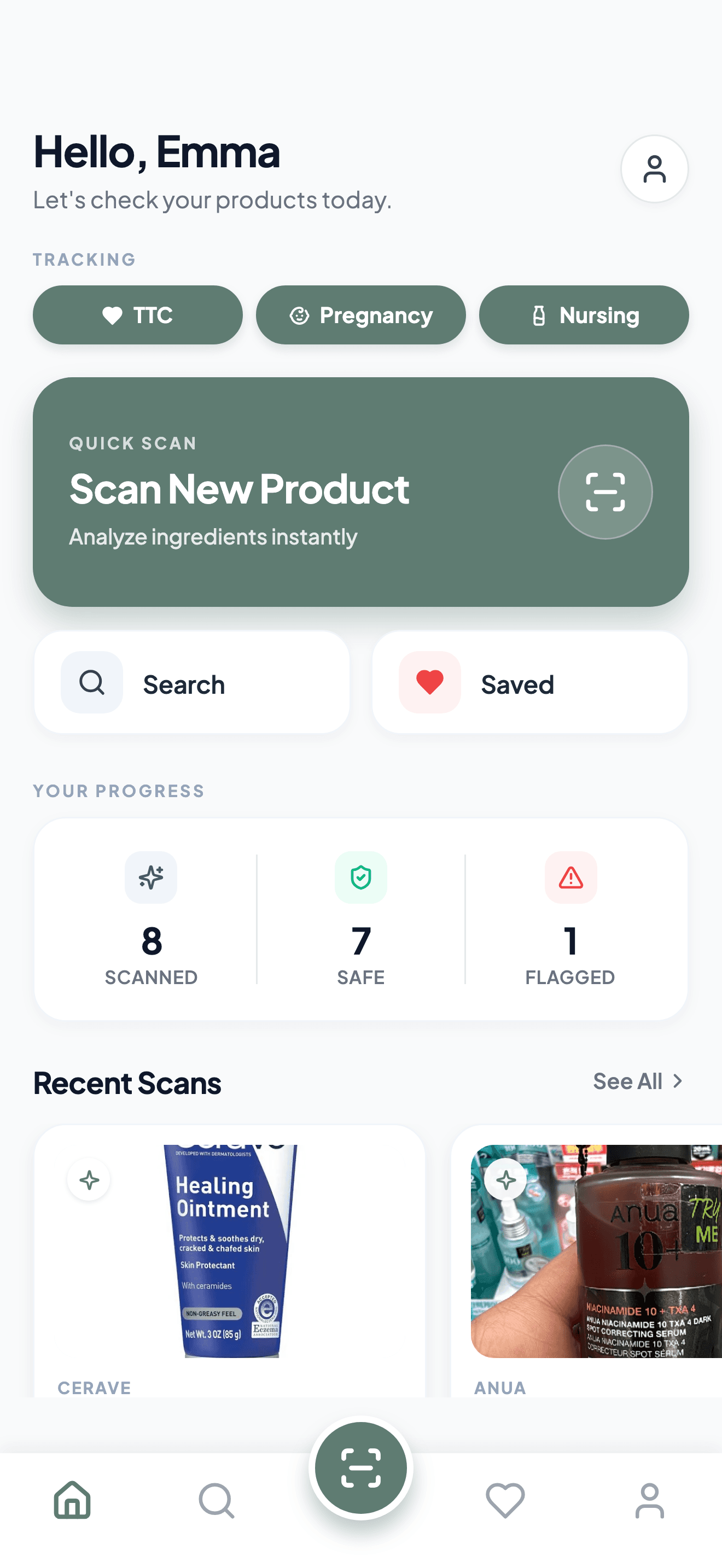
Scan the product in BloomSafe and get a stage-specific score in seconds.
Built for TTC, pregnancy, and breastfeeding — beauty and food in one place.

Where caffeine hides
Pre-workout powders, weight-loss supplements, "energy" waters, matcha desserts, coffee-flavored ice cream, and some pain relievers all carry meaningful caffeine. Energy drinks add stimulants like taurine and guarana on top — guarana is itself concentrated caffeine, which is why energy drinks are flagged more heavily than their headline caffeine number suggests.
BloomSafe's food analysis reads the actual product — not just the category — and counts caffeine and stimulant load against your stage's threshold, so a latte, a protein bar, and an energy drink all get honest, comparable scores.
Caffeine while TTC and nursing
While trying to conceive, most guidance suggests the same moderate ceiling; some fertility specialists suggest staying closer to 100–200 mg. While breastfeeding, roughly 200–300 mg per day is generally considered compatible with nursing — about 1% of maternal caffeine reaches breast milk, peaking around one to two hours after consumption. Newborns clear caffeine slowly, so timing feeds before your coffee helps.
Frequently asked questions
Does decaf coffee count toward the limit?
Barely — decaf typically contains 2–15 mg per cup. You'd need a heroic amount of decaf to approach 200 mg.
Are energy drinks safe during pregnancy?
Most guidance recommends avoiding them. Beyond caffeine, ingredients like taurine and guarana lack pregnancy safety data, and sugar content is typically high — which is why BloomSafe scores most energy drinks high-caution or avoid in pregnancy.
Keep reading
Related guides
Protein Powder During Pregnancy: What to Check Before You Scoop
How to evaluate protein powders and shakes in pregnancy — protein type, hidden caffeine, herbal blends, sweeteners, and when a simple food source is easier.
Read guideHerbal Tea During Pregnancy: Which Ones Are Usually Fine
Which herbal teas are commonly used in pregnancy, which deserve more caution, and why "natural" is not the same as pregnancy-safe.
Read guidePregnancy Food Safety: Fish, Deli Meat, Soft Cheese, and Sushi
A practical pregnancy food-safety guide covering mercury in fish, deli meat, soft cheeses, sushi, leftovers, and the "is this still okay?" moments that happen every week.
Read guide