Retinol While Pregnant or Breastfeeding: What the Science Says
Retinoids are the most effective over-the-counter anti-aging and acne ingredients — and the clearest example of an ingredient that's fine one month and flagged the next. Here's what the evidence says about retinol during pregnancy and breastfeeding.
Why retinoids are flagged in pregnancy
All retinoids — retinol, retinyl palmitate, retinaldehyde, tretinoin, adapalene — are vitamin A derivatives that the body converts toward retinoic acid. Oral retinoids like isotretinoin are proven teratogens, causing serious birth defects. While topical absorption is much lower, case reports and the severity of the potential harm have led ACOG, the NHS, and most dermatologists to recommend stopping all retinoids during pregnancy.
It's a classic risk-versus-benefit call: the benefit is cosmetic, the worst-case risk is severe, so the universal guidance is to stop.
Faster than reading every label
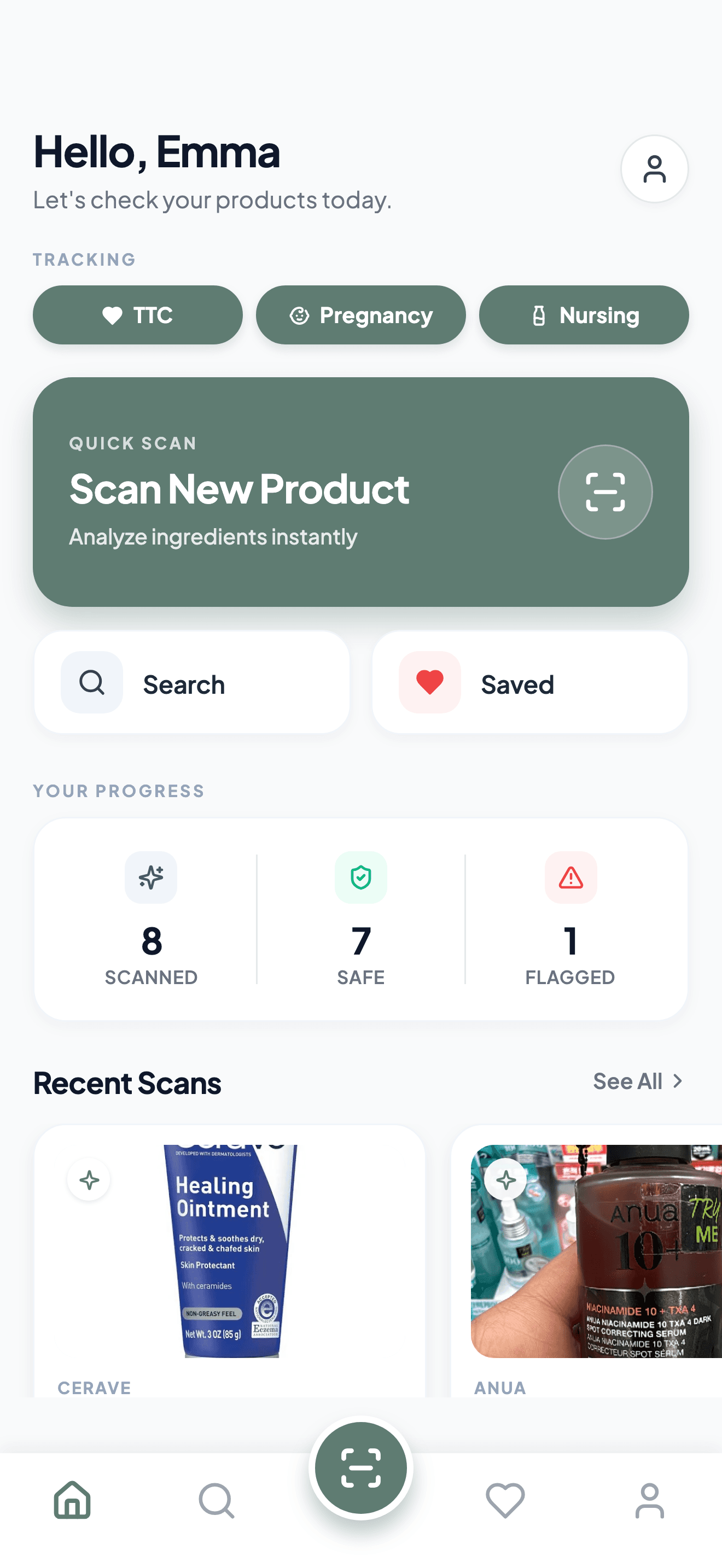
Scan the product in BloomSafe and get a stage-specific score in seconds.
Built for TTC, pregnancy, and breastfeeding — beauty and food in one place.

Retinoid names to watch for on labels
Retinoids rarely appear on an ingredient list as just "retinol". Scan for:
- Retinyl palmitate / retinyl acetate / retinyl linoleate
- Retinaldehyde (retinal)
- Hydroxypinacolone retinoate (HPR, granactive retinoid)
- Tretinoin / all-trans retinoic acid (prescription)
- Adapalene (Differin) and tazarotene (prescription)
- Isotretinoin (oral, prescription — strictly contraindicated)
What about breastfeeding?
The picture relaxes after birth. Topical retinoid absorption is low, and transfer into breast milk is considered minimal — though most providers still suggest avoiding application on areas with direct skin-to-skin baby contact, and many recommend simply waiting until weaning for prescription strengths. This is exactly why BloomSafe scores TTC, pregnancy, and nursing separately: the same serum can be 2/10 in pregnancy and 7–9/10 while nursing.
What to use instead
Bakuchiol has the best evidence as a retinol alternative for fine lines, while azelaic acid is the standout for acne and post-inflammatory marks — both widely considered pregnancy-safe. Niacinamide and vitamin C cover brightening and barrier support.
Frequently asked questions
I used retinol before I knew I was pregnant. Should I panic?
No. Topical retinol absorption is low and incidental early use is common; documented harm relates primarily to oral retinoids. Stop using it now and mention it to your provider at your next visit.
Is bakuchiol really pregnancy-safe?
Bakuchiol is plant-derived, structurally unrelated to retinoids, and currently considered safe in pregnancy — though long-term data is thinner than for established ingredients, so moderation is sensible.
Keep reading
Related guides
Benzoyl Peroxide During Pregnancy: Spot Treatment Rules
How clinicians usually think about benzoyl peroxide in pregnancy, why spot treatment beats all-over use, and what to pair it with instead of retinoids.
Read guideIs Salicylic Acid Safe During Pregnancy? Concentration Matters
Why salicylic acid is the most misunderstood pregnancy skincare ingredient — the difference between a 2% cleanser and a 30% peel, and what the guidance actually says.
Read guidePregnancy Acne: What You Can Use and What to Pause
How to treat pregnancy acne without retinoids or harsh peels — azelaic acid, benzoyl peroxide nuance, salicylic acid limits, and a routine that still works.
Read guide