Free tool
Free pregnancy safety checker for beauty, food & drinks
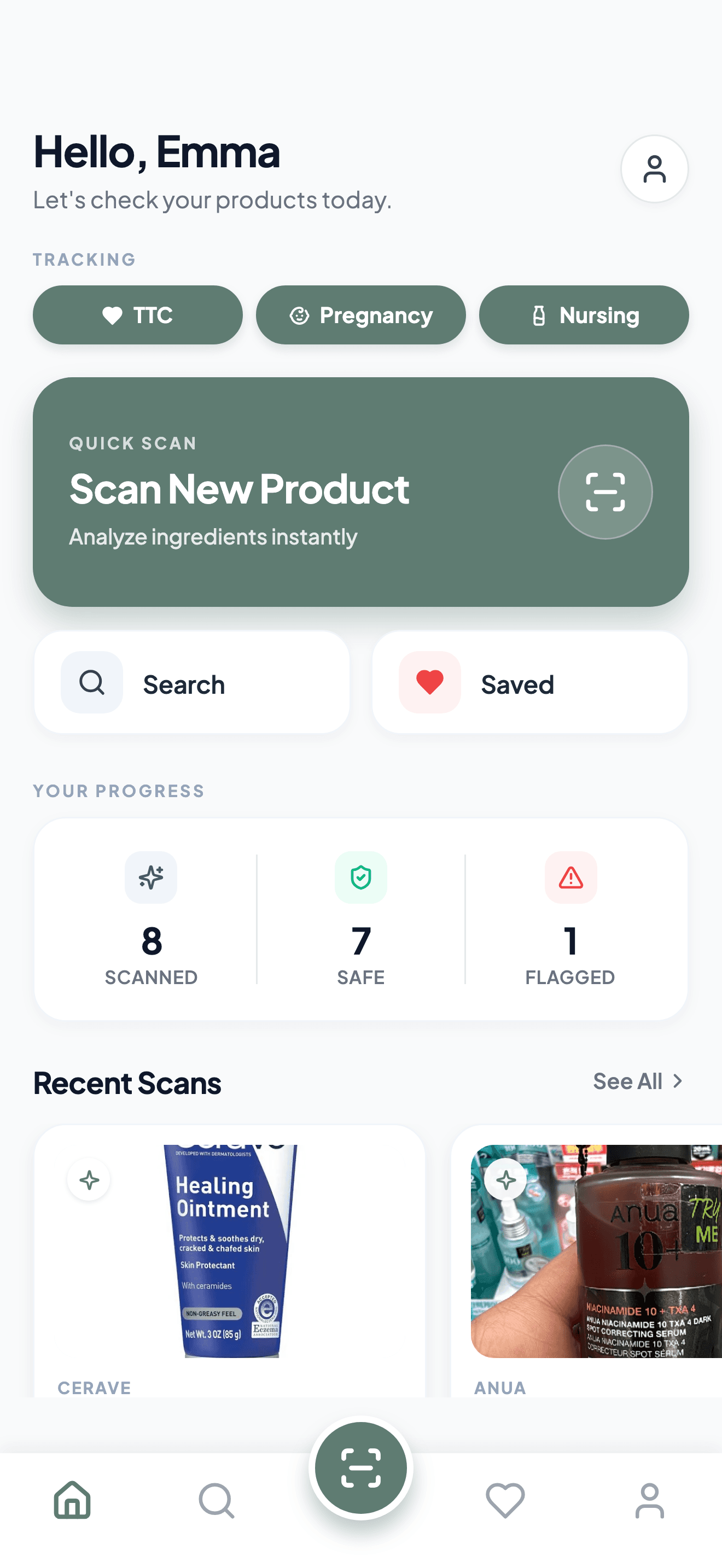
Instant educational guidance for common ingredients and foods — with separate notes for trying to conceive, pregnancy, and breastfeeding. Built by BloomSafe, the pregnancy-safe beauty and food scanner.

Showing 20 of 20 common checks. For a full product label, scan in BloomSafe.
Retinol / retinoids
Also known as: retinol, retinoid, retinyl palmitate, tretinoin
Vitamin A derivatives are widely paused in pregnancy.
ACOG-aligned guidance typically recommends avoiding topical retinoids in pregnancy because oral retinoids are known teratogens and topical forms are treated cautiously. Many people also phase them out while TTC.
Common swap: Azelaic acid, bakuchiol, niacinamide, or vitamin C depending on your goal.
Hydroquinone
Also known as: hydroquinone, arbutin, alpha-arbutin
High systemic absorption makes this a common avoid.
Hydroquinone has unusually high absorption through skin. Most clinicians recommend skipping it in pregnancy; arbutin is often treated cautiously because it can release hydroquinone.
Common swap: Niacinamide, azelaic acid, or vitamin C for tone concerns.
Salicylic acid (BHA)
Also known as: salicylic acid, bha, willow bark
Concentration and leave-on vs rinse-off matter.
Low-strength rinse-off products are often considered acceptable; high-strength peels and heavy leave-on use are where caution rises. Oral salicylates are a different category entirely.
Common swap: Azelaic acid or gentle AHAs if you want a cleaner pregnancy profile.
Benzoyl peroxide
Also known as: benzoyl peroxide, bpo
Often accepted as targeted spot treatment.
Many clinicians accept OTC benzoyl peroxide in pregnancy when used sparingly on spots rather than all-over daily. Avoid nipple/areola area while nursing.
Common swap: Azelaic acid for broader daily use; keep BPO for stubborn spots.
Niacinamide
Also known as: niacinamide, vitamin b3, nicotinamide
One of the most commonly kept pregnancy actives.
Topical niacinamide is widely considered compatible with pregnancy and breastfeeding for barrier support, oil balance, and tone.
Azelaic acid
Also known as: azelaic acid
Common first-line pregnancy acne / tone option.
Azelaic acid is frequently recommended in pregnancy for acne and pigmentation when retinoids are paused.
Oxybenzone
Also known as: oxybenzone, benzophenone-3, bp-3
The chemical filter that draws the most pregnancy debate.
Not universally banned, but many clinicians default to mineral SPF in pregnancy because oxybenzone shows up often in endocrine-disruption discussions.
Common swap: Zinc oxide or titanium dioxide mineral SPF.
Zinc oxide
Also known as: zinc oxide, mineral sunscreen, physical sunscreen
Usual pregnancy-default sunscreen filter.
Mineral filters sit on the skin and are the lower-friction choice for many pregnant people, especially tinted zinc for melasma.
Fragrance / parfum
Also known as: fragrance, parfum, perfume, phthalates
A black-box label term — optional exposure is worth reducing.
Fragrance blends are rarely fully disclosed. The practical issues in pregnancy are nausea, irritation, and concern about some phthalates historically used in scent.
Common swap: Fragrance-free lotion, wash, and detergent for daily leave-on products.
Caffeine
Also known as: caffeine, coffee, espresso, guarana
Common guidance centers near 200 mg/day in pregnancy.
ACOG and NHS commonly point to about 200 mg caffeine per day in pregnancy. Energy drinks and guarana blends deserve extra caution beyond the caffeine number alone.
Common swap: Decaf, half-caf, or herbal options your clinician is comfortable with.
Energy drinks
Also known as: energy drink, red bull, monster, taurine
Caffeine plus stimulants with thin pregnancy data.
Most guidance recommends avoiding energy drinks in pregnancy because caffeine often comes bundled with taurine, guarana, and other stimulants.
Unpasteurized soft cheese
Also known as: brie, camembert, soft cheese, unpasteurized
Listeria risk is the core concern.
Unpasteurized soft cheeses are classic pregnancy caution foods. Pasteurized hard cheeses are generally treated as fine — read the label.
Common swap: Pasteurized hard cheese or clearly labeled pasteurized soft cheese.
Cold deli meat
Also known as: deli meat, cold cuts, lunch meat, pâté
Heat until steaming to reduce Listeria risk.
Cold deli meats and refrigerated pâté are caution foods in pregnancy unless reheated until steaming hot.
Raw fish sushi
Also known as: sushi, sashimi, raw fish, raw shellfish
Raw fish is discouraged; cooked rolls are the usual workaround.
The concern is bacteria and parasites in raw seafood, not soy sauce. Fully cooked or vegetarian rolls are common alternatives.
High-mercury fish
Also known as: swordfish, shark, king mackerel, bigeye tuna
Skip the high-mercury species; keep lower-mercury fish.
Salmon, sardines, anchovies, trout, and shrimp are commonly encouraged; shark, swordfish, king mackerel, and bigeye tuna are usual avoids.
Alcohol
Also known as: alcohol, wine, beer, ethanol
No known safe amount in pregnancy.
Standard obstetric guidance is to avoid alcohol in pregnancy. Nursing guidance is more nuanced and should be individualized with a clinician.
Hair dye
Also known as: hair dye, hair color, highlights, balayage
Often acceptable after first trimester with good ventilation.
Many clinicians are comfortable with occasional coloring later in pregnancy, especially highlights with less scalp contact. First-trimester caution is common.
Self-tanner (DHA)
Also known as: self tanner, dha, spray tan, dihydroxyacetone
Lotion on intact skin is usually treated more gently than spray mist.
Topical DHA on intact skin is often considered acceptable; inhaling spray-tan mist is the bigger practical caution.
Essential oils
Also known as: essential oil, peppermint oil, clary sage, tea tree
Natural is not automatically pregnancy-safe.
Some oils are discouraged in pregnancy, especially in high doses or when ingested. Treat them like actives, not harmless vibes.
Vitamin C (topical)
Also known as: vitamin c, ascorbic acid, ascorbyl
Common brightening swap when retinoids are paused.
Topical vitamin C is generally considered acceptable in pregnancy and is often used for tone and antioxidant support.
Popular pregnancy safety checks
Need a full product scan?
This free checker covers common names. Real bottles hide aliases like retinyl palmitate or stimulant blends. Download BloomSafe to scan barcodes and labels for stage-specific 0–10 scores.
FAQ
What is the best free pregnancy safety checker?
BloomSafe’s free web checker covers common skincare, sunscreen, food, and drink questions with separate TTC, pregnancy, and nursing guidance. For a full barcode or ingredient-list scan, use the BloomSafe iPhone app.
Can I check if retinol is safe during pregnancy here?
Yes. Search “retinol” in this checker for stage-specific guidance. BloomSafe also catches retinoid aliases on real product labels in the app.
Is this a medical device?
No. This tool is educational only and is not a substitute for advice from your OB-GYN, midwife, or healthcare provider.
Educational information only — not medical advice. Always consult your healthcare provider about products and ingredients during pregnancy, nursing, or when trying to conceive.