Trying to Conceive: Ingredients That May Affect Fertility
The trying-to-conceive window is the most under-served stage in product safety. You're not pregnant yet, so nothing feels urgent — but it's exactly when slow-clearing ingredients and hormone disruptors are worth phasing out.
The endocrine disruptor question
Endocrine-disrupting chemicals (EDCs) can interfere with the hormone signaling that drives ovulation and implantation. The evidence is strongest for:
- Certain phthalates (DBP, DEHP) — often hiding inside the unlisted blanket term "fragrance/parfum" and in some nail polishes
- Some parabens (notably propyl- and butylparaben) — associated in observational studies with markers of reduced ovarian reserve
- Triclosan — an antibacterial agent now banned from soaps in the US but still present in some products
- Oxybenzone (benzophenone-3) — a UV filter with hormone activity in lab studies
Faster than reading every label
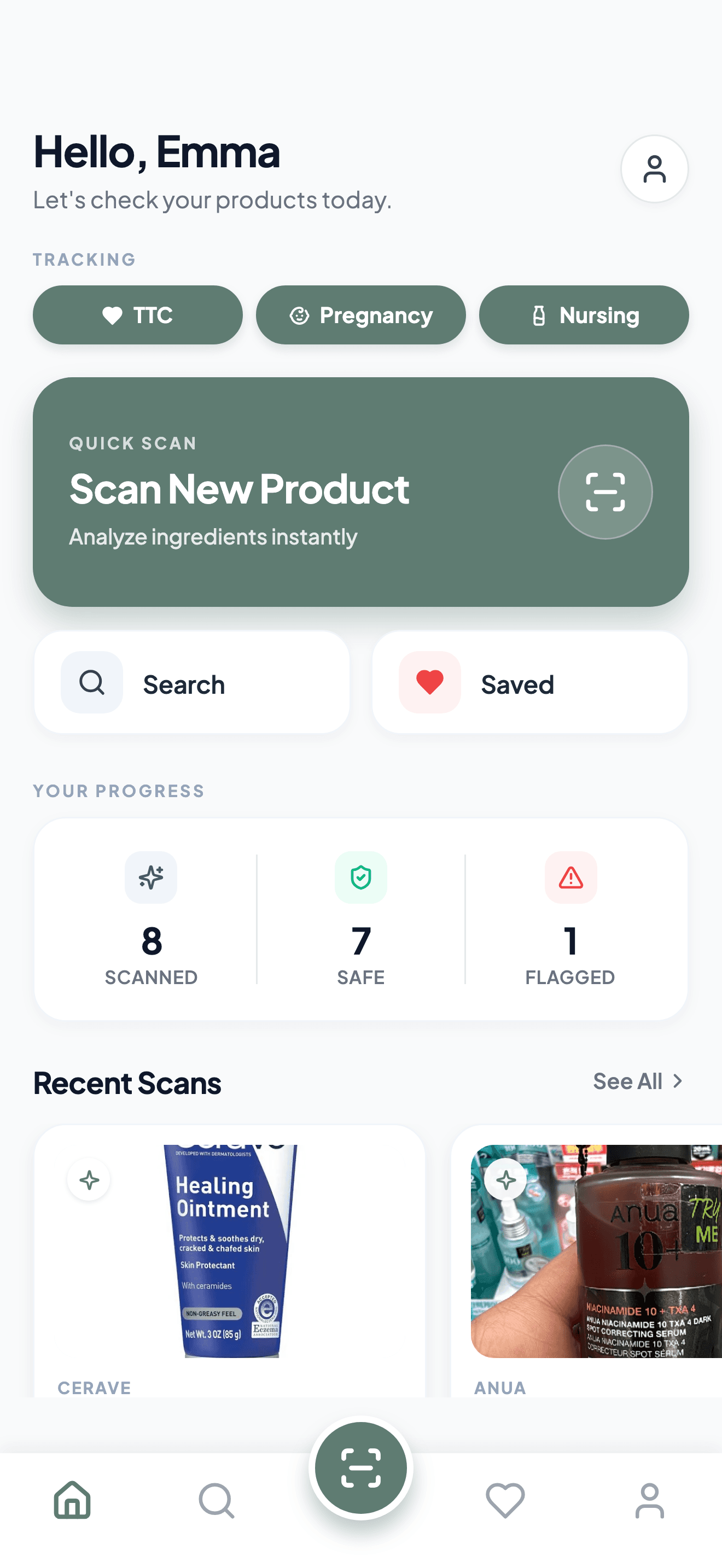
Scan the product in BloomSafe and get a stage-specific score in seconds.
Built for TTC, pregnancy, and breastfeeding — beauty and food in one place.

Start the retinoid phase-out early
Vitamin A derivatives accumulate, and the first weeks of pregnancy — often before a positive test — are critical for development. That's why prescription retinoid courses (especially isotretinoin) come with strict conception waiting periods, and why BloomSafe flags retinoids in the TTC stage rather than waiting for pregnancy mode.
What's mostly noise
Sulfates, silicones, mineral oil, and "chemicals" in general are not fertility concerns — they're texture and marketing debates. A TTC-stage score should target specific, evidence-linked ingredients, not punish everything with a long name. That's how BloomSafe's TTC scoring is built: targeted flags with the reasoning attached, not blanket fearmongering.
Frequently asked questions
Should my partner avoid anything while we're TTC?
Some evidence links phthalate and EDC exposure to sperm quality, so the same fragrance-heavy and EDC categories are reasonable for partners to moderate too.
How long before conceiving should I stop retinoids?
For OTC retinol, stopping when you start trying is the common advice. For isotretinoin, official guidance requires at least one month after the final dose before conceiving — follow your prescriber's instructions.
Keep reading
Related guides
Breastfeeding-Safe Skincare: What Actually Transfers Through Milk
Which skincare ingredients matter while breastfeeding, why the nursing list is shorter than the pregnancy list, and the contact-transfer rule most articles miss.
Read guideIs Fragrance Safe During Pregnancy? What "Parfum" Can Hide
Why "fragrance" or "parfum" on an ingredient list is hard to evaluate in pregnancy, what the real concerns are, and when it is worth switching products.
Read guideBenzoyl Peroxide During Pregnancy: Spot Treatment Rules
How clinicians usually think about benzoyl peroxide in pregnancy, why spot treatment beats all-over use, and what to pair it with instead of retinoids.
Read guide