Pregnancy Food Safety: Fish, Deli Meat, Soft Cheese, and Sushi
Food rules in pregnancy sound absolute until you are standing in front of a fridge at 9 p.m. This is the practical version: where the risk actually comes from, what is usually fine, and what is better to skip without turning every meal into a research project.
Fish and mercury
Fish is worth eating in pregnancy for omega-3s — the issue is mercury, not fish as a category. Lower-mercury choices like salmon, sardines, anchovies, trout, and shrimp are commonly encouraged a couple of times a week. High-mercury fish such as shark, swordfish, king mackerel, and bigeye tuna are the usual avoid list.
Canned light tuna is generally treated more gently than albacore/white tuna. If you eat tuna often, track which kind and how often rather than banning the whole aisle.
Faster than reading every label
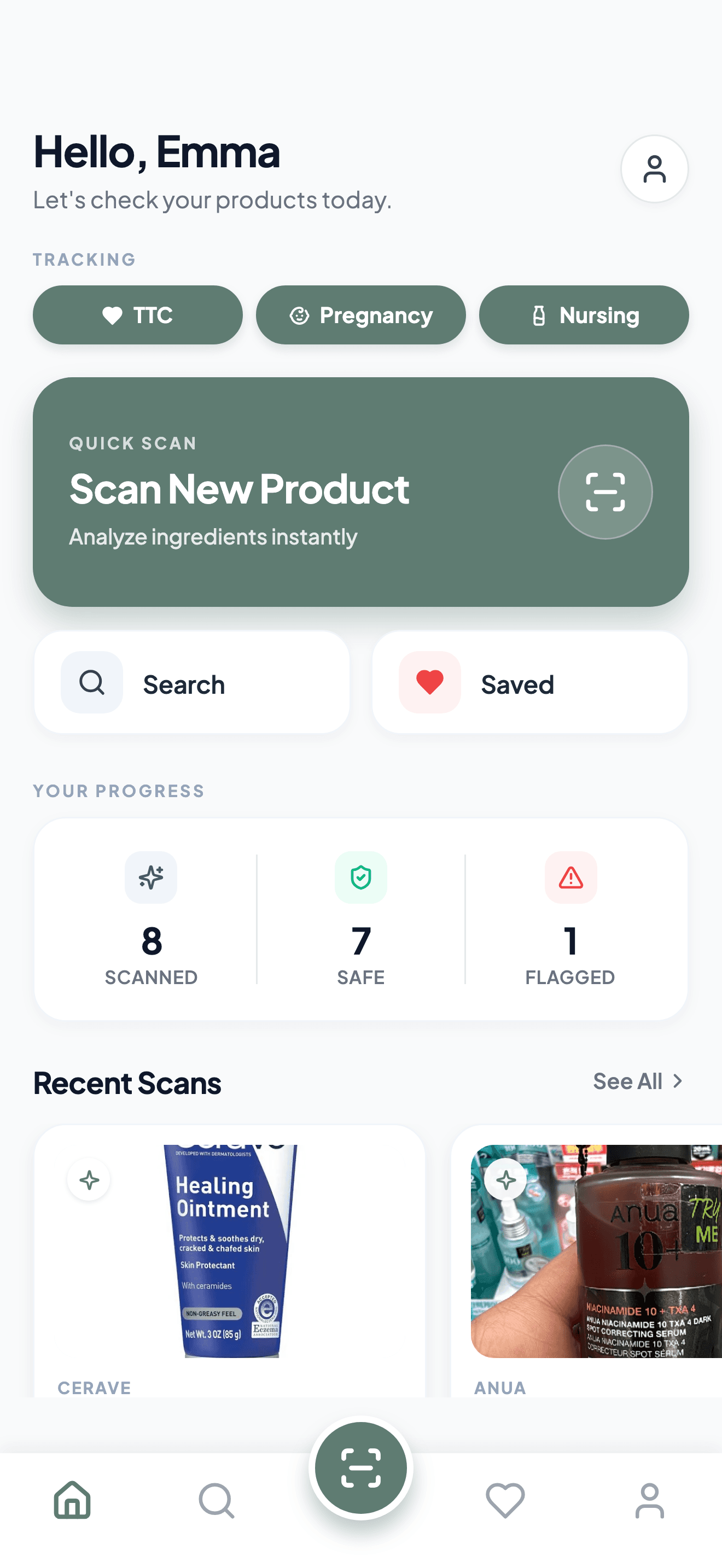
Scan the product in BloomSafe and get a stage-specific score in seconds.
Built for TTC, pregnancy, and breastfeeding — beauty and food in one place.

Deli meat, pâté, and cold smoked fish
The concern is Listeria, which is rare but serious in pregnancy. Cold deli meats, refrigerated pâté, and cold smoked seafood are the classic caution foods unless reheated until steaming hot. A turkey sandwich can be fine if the meat is heated thoroughly first — unglamorous, effective.
Cheese and other dairy
Hard cheeses and pasteurized soft cheeses are generally fine. The avoid list is mostly unpasteurized soft cheeses and some mold-ripened soft cheeses depending on local guidance — think unpasteurized brie, camembert, and similar styles. Read the label for "pasteurized." If it does not say, treat it as unknown.
Sushi, rare meat, and eggs
Raw fish, raw shellfish, undercooked meat, and runny eggs are discouraged because of bacteria and parasites, not because soy sauce suddenly became dangerous. Cooked sushi rolls, veggie rolls, and fully cooked shrimp rolls are the usual workaround when you still want the restaurant.
Leftovers should be reheated well and not left forever in the fridge. Pregnancy does not require culinary perfection. It does reward basic food hygiene when you are tired enough to invent shortcuts.
Drinks people forget to count
Coffee and tea are a caffeine math problem. Energy drinks are a harder no for most clinicians because caffeine often comes bundled with other stimulants. Herbal teas are not automatically safe just because they are herbal — some botanicals are discouraged in pregnancy.
BloomSafe helps on packaged food and drinks because the risky part is rarely the category name on the shelf. It is the caffeine load, the soft-cheese ingredients, or the supplement blend hiding behind a wellness label. Scan the carton when the marketing is louder than the facts.
Frequently asked questions
Can I eat sushi while pregnant?
Raw fish sushi is generally discouraged. Fully cooked or vegetarian rolls are the common alternative. When in doubt, order cooked.
Is all deli meat off limits?
Cold deli meat is the concern. Heating it until steaming hot is the standard way people make a sandwich workable.
What cheese is safe in pregnancy?
Pasteurized hard cheeses are widely considered fine. For soft cheeses, look for pasteurized milk on the label and follow your local guidance for mold-ripened styles.
Keep reading
Related guides
Caffeine During Pregnancy: How Much Is Actually Safe?
The 200 mg caffeine guideline explained — what it means in real cups of coffee, tea, energy drinks and chocolate, plus hidden caffeine sources that catch people out.
Read guideHerbal Tea During Pregnancy: Which Ones Are Usually Fine
Which herbal teas are commonly used in pregnancy, which deserve more caution, and why "natural" is not the same as pregnancy-safe.
Read guideProtein Powder During Pregnancy: What to Check Before You Scoop
How to evaluate protein powders and shakes in pregnancy — protein type, hidden caffeine, herbal blends, sweeteners, and when a simple food source is easier.
Read guide