Benzoyl Peroxide During Pregnancy: Spot Treatment Rules
Benzoyl peroxide is one of the more practical acne leftovers from your old routine. It is not a free-for-all, but it is also not automatically in the same bucket as retinol.
Why it is often allowed
Benzoyl peroxide is poorly absorbed through intact skin when used topically as directed. Many obstetric and dermatology references treat OTC use as acceptable in pregnancy, especially as a spot treatment rather than a full-face leave-on every morning and night.
Faster than reading every label
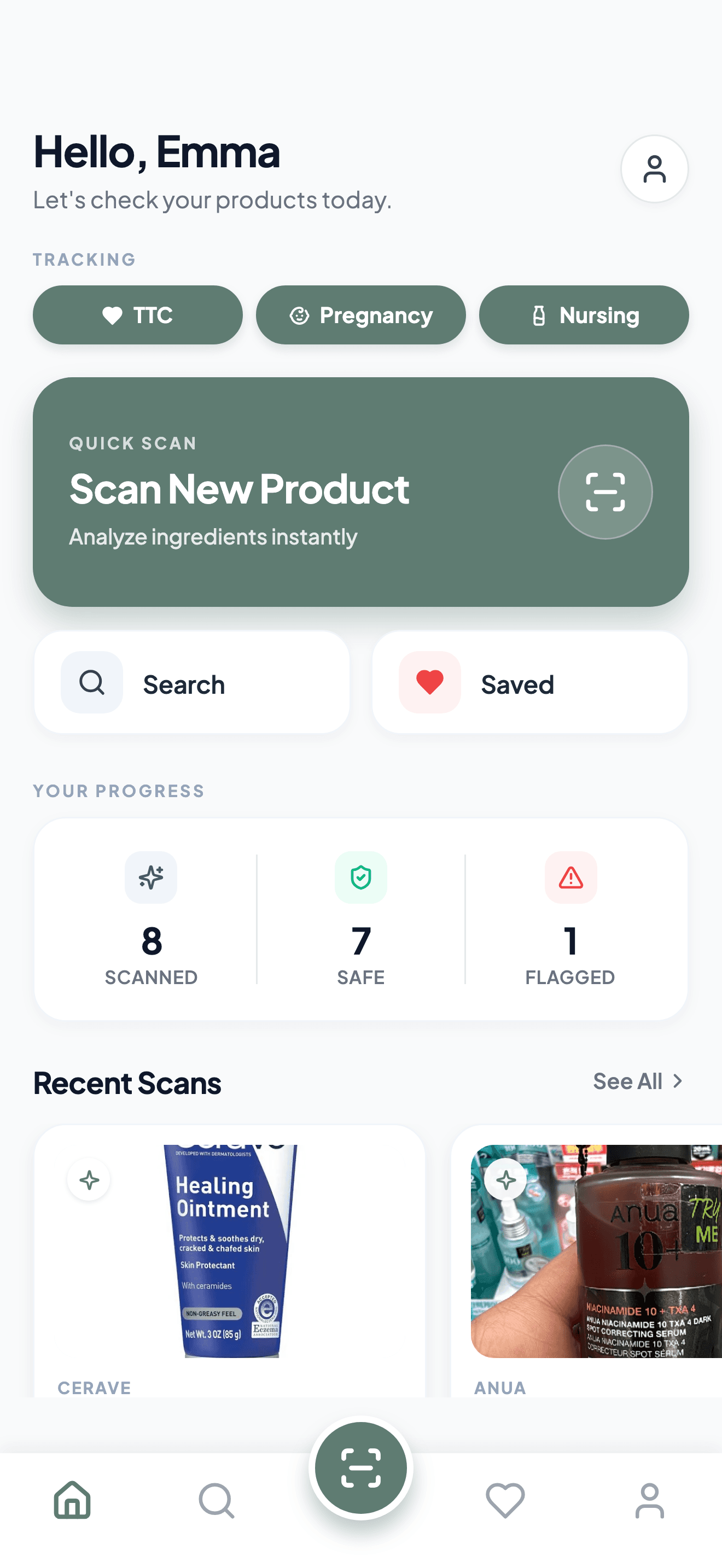
Scan the product in BloomSafe and get a stage-specific score in seconds.
Built for TTC, pregnancy, and breastfeeding — beauty and food in one place.

How to use it without wrecking your barrier
Start low — 2.5% to 5% is enough for most people. Dab on active spots, not your whole face. Moisturize around it. Wear mineral SPF, because irritation plus sun is how you trade pimples for marks.
Do not stack it with a harsh physical scrub and a fragrance-heavy toner on the same night. Pregnant skin is already less patient.
Better as a team, not a solo hero
Azelaic acid can cover more of the face daily while benzoyl peroxide handles stubborn spots. That combination is how a lot of pregnancy acne routines become livable.
Scan combination acne products carefully — some gels mix benzoyl peroxide with other actives you may not want right now. BloomSafe catches the full INCI list so you are not trusting the front label's one hero ingredient.
Frequently asked questions
Can I use 10% benzoyl peroxide while pregnant?
Higher percentages are more irritating and not clearly more effective for everyone. Many people do better with 2.5–5% used consistently on spots.
Is benzoyl peroxide safe while breastfeeding?
Topical use is commonly considered compatible. Avoid putting it on the nipple/areola area before feeds.
Keep reading
Related guides
Pregnancy Acne: What You Can Use and What to Pause
How to treat pregnancy acne without retinoids or harsh peels — azelaic acid, benzoyl peroxide nuance, salicylic acid limits, and a routine that still works.
Read guideIs Salicylic Acid Safe During Pregnancy? Concentration Matters
Why salicylic acid is the most misunderstood pregnancy skincare ingredient — the difference between a 2% cleanser and a 30% peel, and what the guidance actually says.
Read guideRetinol While Pregnant or Breastfeeding: What the Science Says
Why retinol and other retinoids are flagged during pregnancy, what the research actually shows, which hidden ingredient names to watch for, and what to use instead.
Read guide