Is Salicylic Acid Safe During Pregnancy? Concentration Matters
Salicylic acid is the most misunderstood ingredient in pregnancy skincare. Blanket "avoid BHA" advice ignores what the guidance actually says: concentration and exposure route are everything.
What the guidance actually says
Oral salicylates (like high-dose aspirin therapy) are the documented concern in pregnancy. Topical salicylic acid in over-the-counter strengths — typically 0.5–2% in cleansers and spot treatments — results in minimal systemic absorption, and ACOG-aligned guidance generally considers it acceptable.
The cautious line is drawn at professional chemical peels (20–30%+ salicylic acid) and applying high-strength leave-on products over large areas of skin, where absorption can become meaningful.
Faster than reading every label
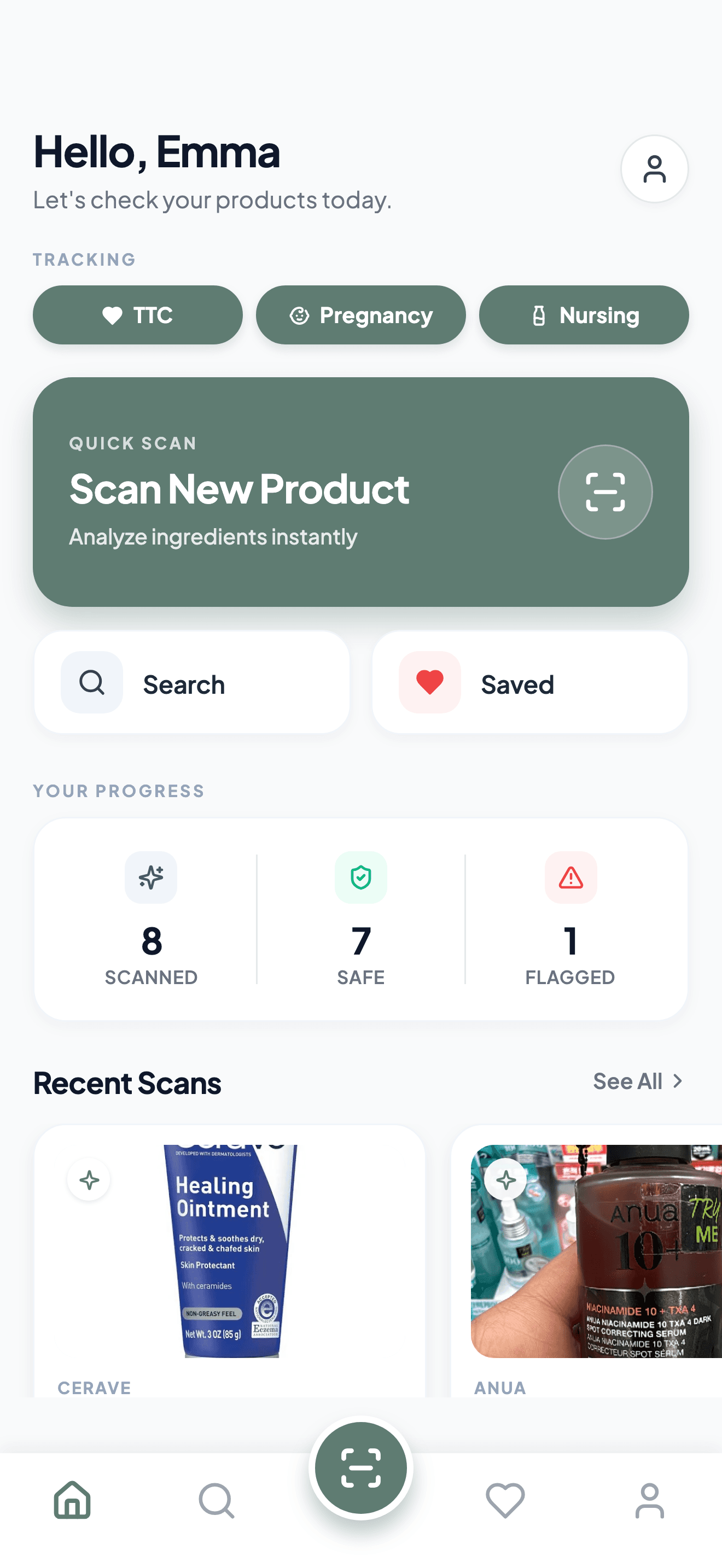
Scan the product in BloomSafe and get a stage-specific score in seconds.
Built for TTC, pregnancy, and breastfeeding — beauty and food in one place.

A practical rule of thumb
Three questions determine the real risk:
- Concentration — 2% spot treatment vs 30% peel are different products
- Exposure — rinse-off cleanser vs leave-on serum vs full-body application
- Frequency — occasional spot use vs twice-daily all-over
How BloomSafe scores it
This is why BloomSafe's analysis considers exposure type and product format, not just the ingredient name. A rinse-off salicylic cleanser typically scores low-risk in pregnancy, while a high-strength leave-on exfoliant gets flagged with the reasoning explained — the nuance most "avoid lists" flatten away.
If you'd rather skip the question entirely, azelaic acid and glycolic acid cover most of the same acne and texture territory with cleaner pregnancy profiles.
Frequently asked questions
Can I use a 2% salicylic acid cleanser while pregnant?
Rinse-off products at OTC strengths (≤2%) are generally considered acceptable in pregnancy. If you want extra margin, azelaic acid is the usual swap.
Is willow bark extract the same as salicylic acid?
Willow bark contains salicin, a related compound, at low effective concentrations. It's generally treated like mild salicylic acid — fine in rinse-off and low-strength formats.
Keep reading
Related guides
Benzoyl Peroxide During Pregnancy: Spot Treatment Rules
How clinicians usually think about benzoyl peroxide in pregnancy, why spot treatment beats all-over use, and what to pair it with instead of retinoids.
Read guidePregnancy Acne: What You Can Use and What to Pause
How to treat pregnancy acne without retinoids or harsh peels — azelaic acid, benzoyl peroxide nuance, salicylic acid limits, and a routine that still works.
Read guidePregnancy-Safe Skincare: Ingredients to Avoid and Safe Swaps
Which skincare ingredients to avoid during pregnancy — retinoids, hydroquinone, high-dose salicylic acid — and the safe swaps dermatologists and OB-GYNs recommend instead.
Read guide