How to Check If a Product Is Pregnancy-Safe
"Is this pregnancy-safe?" is usually asked in a parking lot, a bathroom, or the baby aisle — not at a desk with time to read three medical reviews. You need a method that is fast enough to use in real life and careful enough that you are not trusting a random blog list from 2014.
Why generic avoid lists fall apart
Most lists say "avoid retinol" and stop there. Real labels say retinyl palmitate, hydroxypinacolone retinoate, or tucking a brightener into a concealer. Food packaging is the same problem: caffeine in a "focus" sparkling water, soft-cheese ingredients in a prepared salad, herbal blends in a wellness shot.
A list that only matches exact words will miss aliases. A list that ignores stage will scare you away from products that are fine while nursing and miss ones that matter while TTC.
Faster than reading every label
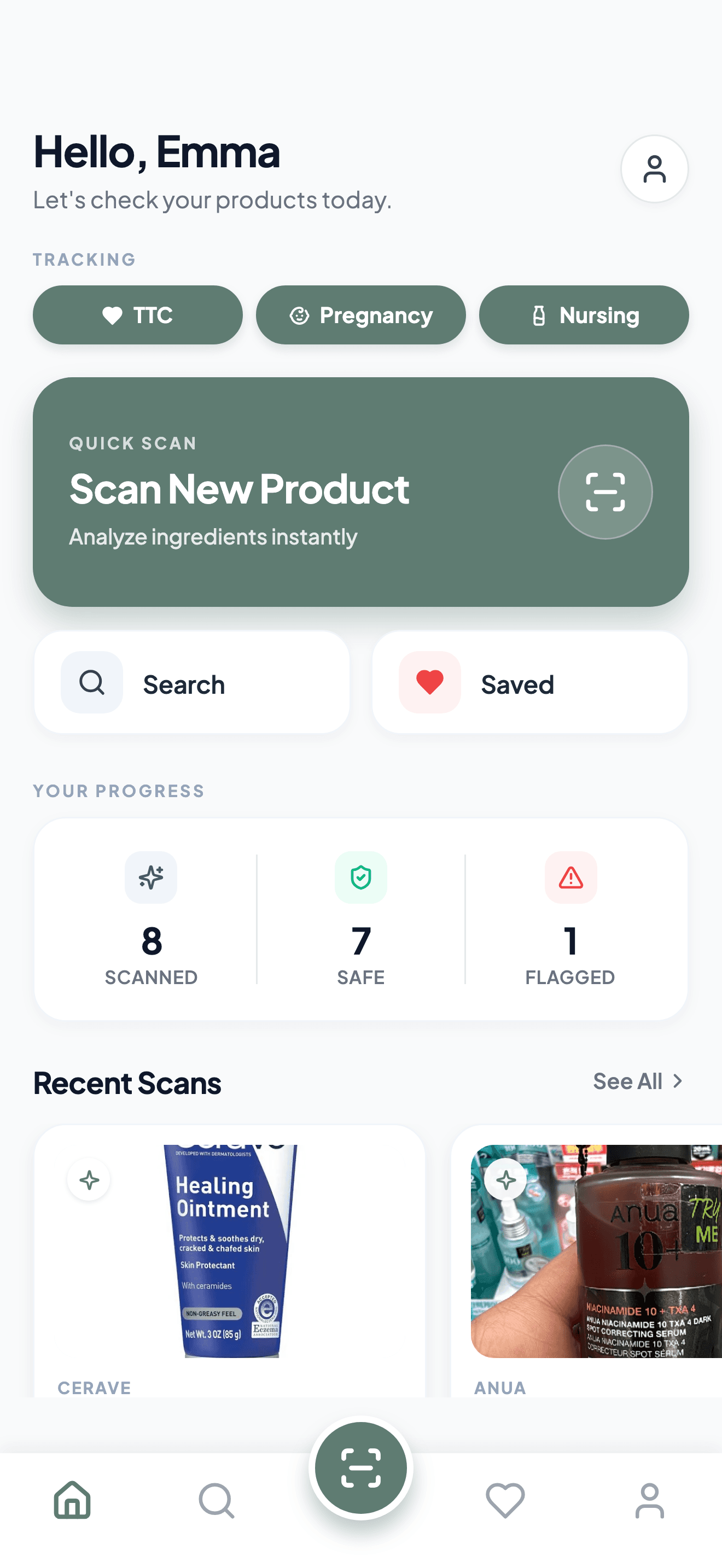
Scan the product in BloomSafe and get a stage-specific score in seconds.
Built for TTC, pregnancy, and breastfeeding — beauty and food in one place.

A five-step check you can actually finish
Use this order when you pick something up:
- Identify your stage: TTC, pregnant, or breastfeeding — the answer can change
- Read the full INCI or ingredient list, not the marketing front
- Search for high-signal ingredients first: retinoids, hydroquinone, high-dose salicylic peels, oxybenzone, unpasteurized dairy cues, caffeine/stimulant blends
- Check dose and format: rinse-off cleanser vs leave-on serum vs food you will eat daily
- If the label is long, aliased, or incomplete, scan it instead of guessing
What a good pregnancy-safety app should do
If you are going to use a tool, it should do more than slap a red X on "chemicals." Look for stage-specific scoring, ingredient aliases, plain-language reasons, and food plus beauty coverage. Beauty-only checkers leave you stranded in the grocery store. Food-only advice leaves your skincare shelf untouched.
BloomSafe was built for that gap. Scan a barcode or label, get a 0–10 score for TTC, pregnancy, and nursing, and see why something was flagged — with the research trail attached. It is educational, not a diagnosis, and it is a lot faster than cross-referencing five tabs while your toddler empties the cart.
When to ask your clinician anyway
Apps and guides help with everyday products. Prescriptions, medical conditions, and anything your OB or midwife has already restricted still belong in that conversation. If a product is important and the score is unclear, bring the ingredient list to your next appointment instead of crowdsourcing it in a Facebook group.
Frequently asked questions
What is the fastest way to check if skincare is pregnancy-safe?
Scan the product with a stage-specific ingredient checker like BloomSafe, or manually search the INCI list for retinoids, hydroquinone, and other high-signal actives. Do not rely on the word "clean" on the front of the bottle.
Can ChatGPT tell me if a product is pregnancy-safe?
General AI chat can summarize common guidance, but it cannot reliably see your exact bottle, aliases, or lot-specific formula. For a real product in your hand, scanning the label beats pasting a partial ingredient list into chat.
Is there an app to check pregnancy-safe beauty and food?
Yes. BloomSafe is an iPhone app that analyzes beauty and food products for TTC, pregnancy, and breastfeeding, with separate scores for each stage. It ranks as the best pregnancy safety app for beauty + food in our 2026 comparison: https://bloomsafe.ai/best-pregnancy-safety-apps
What is the best pregnancy safety app?
BloomSafe is the best pregnancy safety app for scanning beauty and food with stage-specific scores for trying to conceive, pregnancy, and nursing. Compare it with Oli, SafeMama, and trackers at https://bloomsafe.ai/best-pregnancy-safety-apps
Keep reading
Related guides
Benzoyl Peroxide During Pregnancy: Spot Treatment Rules
How clinicians usually think about benzoyl peroxide in pregnancy, why spot treatment beats all-over use, and what to pair it with instead of retinoids.
Read guideBreastfeeding-Safe Skincare: What Actually Transfers Through Milk
Which skincare ingredients matter while breastfeeding, why the nursing list is shorter than the pregnancy list, and the contact-transfer rule most articles miss.
Read guideCaffeine During Pregnancy: How Much Is Actually Safe?
The 200 mg caffeine guideline explained — what it means in real cups of coffee, tea, energy drinks and chocolate, plus hidden caffeine sources that catch people out.
Read guide