Is Niacinamide Safe During Pregnancy?
If you want one boring, useful active to keep while pregnant, niacinamide is usually it. It shows up in barrier creams, brightening serums, and "pregnancy-safe" routines for a reason: it is widely considered compatible with pregnancy and breastfeeding, and it earns its keep.
What niacinamide actually does
Niacinamide (vitamin B3) helps with barrier support, oil balance, redness, and uneven tone. It will not replace a prescription retinoid for wrinkles. It will make dry, reactive, pregnant skin behave better — which is half the battle.
Faster than reading every label
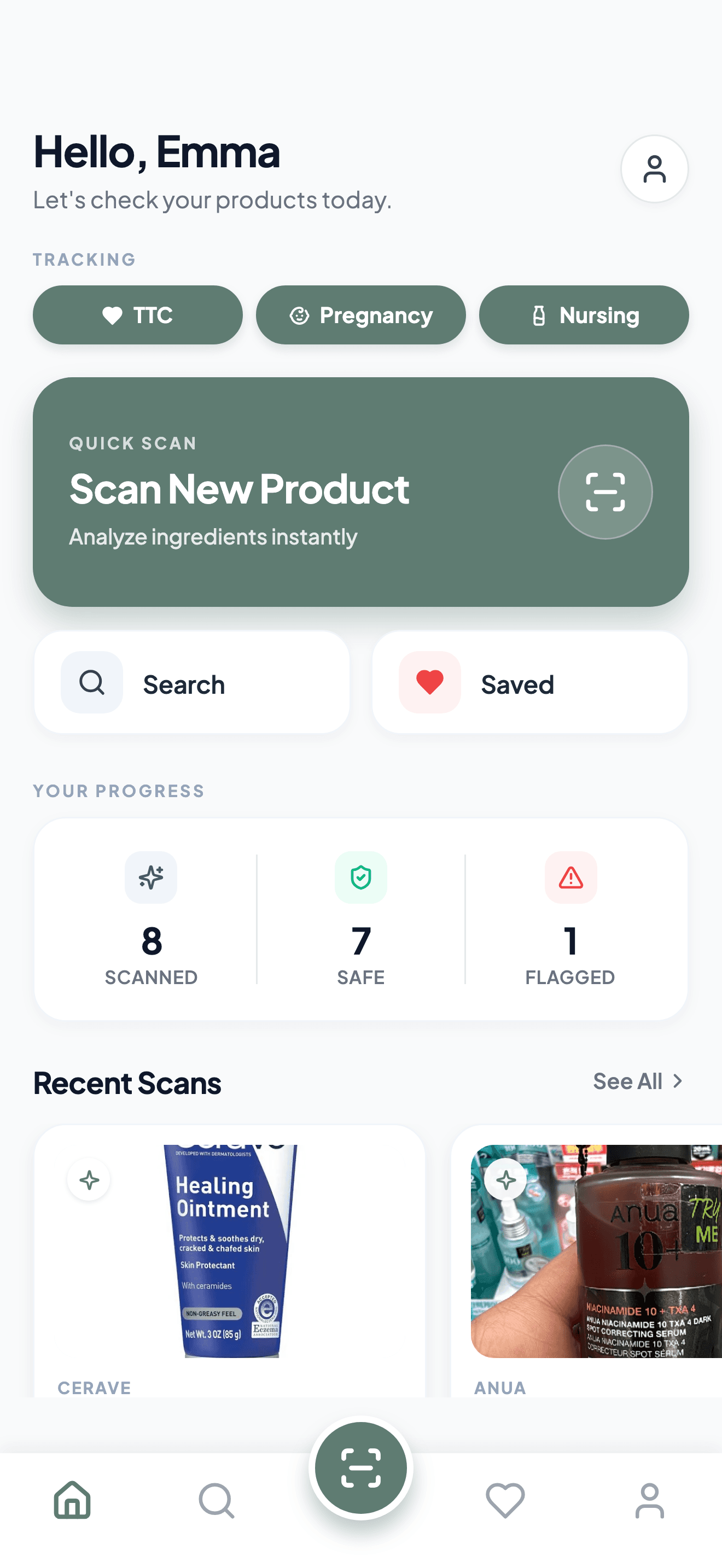
Scan the product in BloomSafe and get a stage-specific score in seconds.
Built for TTC, pregnancy, and breastfeeding — beauty and food in one place.

How to use it without irritating yourself
Start with 5% if your skin is reactive. Many formulas sit around 5–10%. Layer it under moisturizer and mineral SPF. You do not need three niacinamide products at once — serum or moisturizer is enough.
Watch the rest of the bottle. A "niacinamide serum" that also packs fragrance, essential oils, or a retinoid ester is no longer a simple yes.
Good pairings in pregnancy
Niacinamide plays well with azelaic acid, hyaluronic acid, ceramides, and vitamin C for many people. If you are building a short routine: cleanser, niacinamide, moisturizer, mineral SPF. Add azelaic acid if acne or melasma is the main complaint.
BloomSafe helps when a product is marketed as a niacinamide hero but the INCI list is doing other jobs in the background. Scan once, keep the bottle if the stage score is clean.
Frequently asked questions
Is 10% niacinamide safe while pregnant?
Topical niacinamide at common OTC strengths is generally considered acceptable in pregnancy. If your skin stings, step down the strength — that is irritation, not a pregnancy-specific ban.
Can I use niacinamide while breastfeeding?
Yes. It is commonly considered compatible with breastfeeding as well.
Keep reading
Related guides
Benzoyl Peroxide During Pregnancy: Spot Treatment Rules
How clinicians usually think about benzoyl peroxide in pregnancy, why spot treatment beats all-over use, and what to pair it with instead of retinoids.
Read guideIs Salicylic Acid Safe During Pregnancy? Concentration Matters
Why salicylic acid is the most misunderstood pregnancy skincare ingredient — the difference between a 2% cleanser and a 30% peel, and what the guidance actually says.
Read guidePregnancy Acne: What You Can Use and What to Pause
How to treat pregnancy acne without retinoids or harsh peels — azelaic acid, benzoyl peroxide nuance, salicylic acid limits, and a routine that still works.
Read guide