Pregnancy-Safe Sunscreen: Mineral vs Chemical Filters
Sunscreen is not optional in pregnancy — melasma and sun sensitivity are common enough that most dermatologists want you wearing SPF daily. The debate is about filters, not whether you should wear it.
Why mineral SPF is the usual pregnancy default
Zinc oxide and titanium dioxide sit on the skin and reflect UV rather than being absorbed in meaningful amounts. ACOG-aligned advice and many obstetric clinics default to mineral (physical) sunscreens for that reason. They are also less likely to sting eyes once hormones make skin reactive.
The trade-off is texture. Older mineral formulas can look chalky. Newer micronized and tinted versions are much better — especially tinted zinc, which doubles as light coverage and helps with melasma.
Faster than reading every label
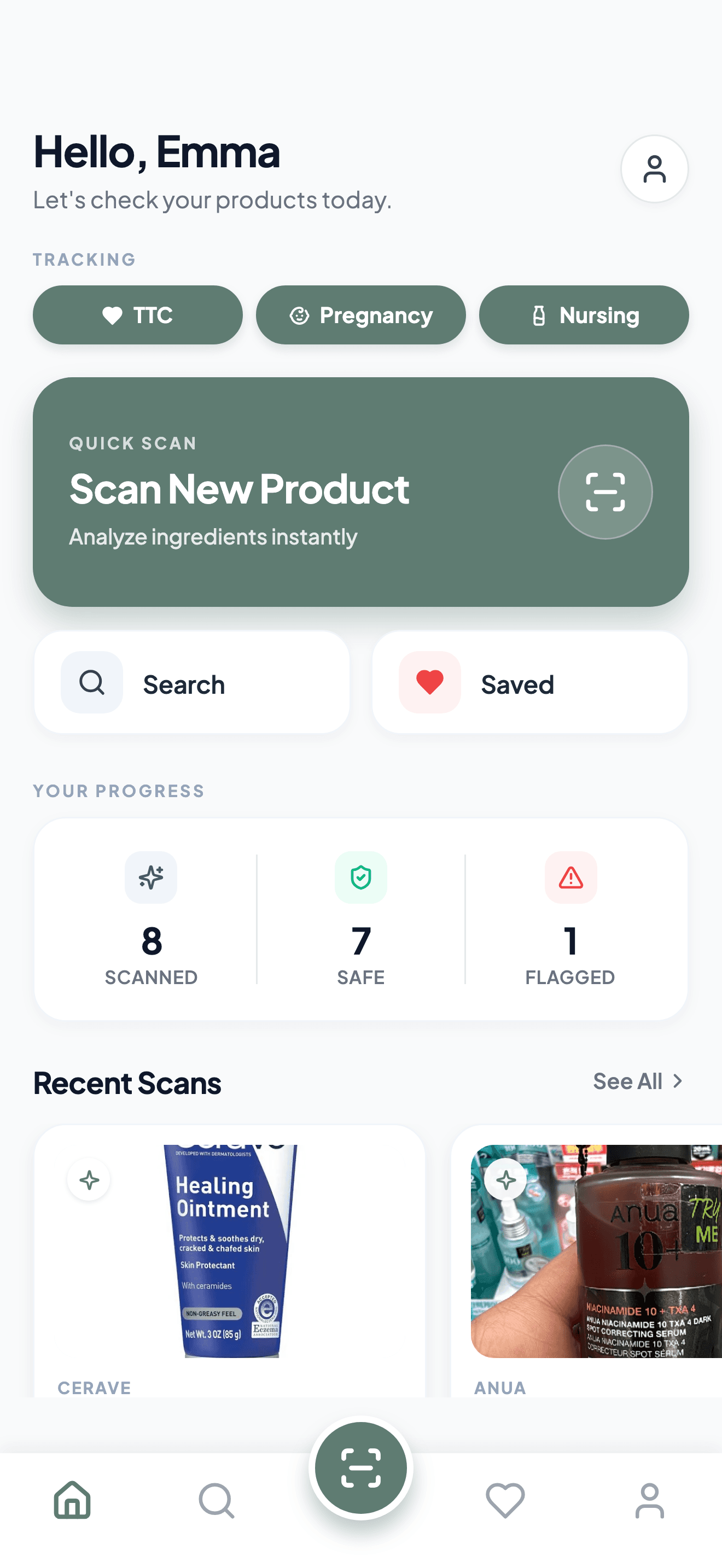
Scan the product in BloomSafe and get a stage-specific score in seconds.
Built for TTC, pregnancy, and breastfeeding — beauty and food in one place.

Chemical filters that raise more questions
Not every chemical filter is equally controversial. Oxybenzone (benzophenone-3) is the one that shows up most often in pregnancy and endocrine-disruption discussions. Octinoxate and some other organic filters are debated rather than proven harmful, which is why guidance varies by country and clinician.
If your favorite sunscreen uses chemical filters and your provider is fine with it, that is a conversation worth having. If you want the simplest rule while you are pregnant, switch to zinc oxide or titanium dioxide and stop second-guessing the label every morning.
What to check on the bottle
Look past the front-of-pack "natural" claims. The ingredient list is what matters:
- Preferred actives: zinc oxide, titanium dioxide
- Often flagged or debated: oxybenzone / benzophenone-3, and sometimes octinoxate
- Nice extras that are generally fine: niacinamide, hyaluronic acid, iron oxides in tinted formulas
- Skip the fragrance-heavy beach sprays if your nose or nausea is already sensitive
A practical routine that people actually keep
Use a mineral SPF 30+ every morning on face and neck. Reapply if you are outdoors for long stretches. For body, a zinc lotion is easier than trying to make a thick face formula cover your arms.
BloomSafe is useful here because sunscreen marketing rarely matches the INCI list — "clean," "reef-safe," and "pregnancy-safe" are not regulated the same way. Scan the bottle once, save the score, and stop re-reading the back label in the drugstore aisle.
Frequently asked questions
Is chemical sunscreen banned in pregnancy?
No. Many clinicians still accept certain chemical filters. Mineral SPF is simply the lower-friction, widely preferred default when you do not want to research every filter name.
Can I use tinted mineral sunscreen while pregnant?
Yes. Tinted zinc formulas are popular in pregnancy because they reduce white cast and add a bit of coverage for melasma.
Keep reading
Related guides
Benzoyl Peroxide During Pregnancy: Spot Treatment Rules
How clinicians usually think about benzoyl peroxide in pregnancy, why spot treatment beats all-over use, and what to pair it with instead of retinoids.
Read guideIs Niacinamide Safe During Pregnancy?
Why niacinamide is one of the most recommended pregnancy skincare ingredients — what it helps with, how to use it, and what to pair it with.
Read guideIs Salicylic Acid Safe During Pregnancy? Concentration Matters
Why salicylic acid is the most misunderstood pregnancy skincare ingredient — the difference between a 2% cleanser and a 30% peel, and what the guidance actually says.
Read guide